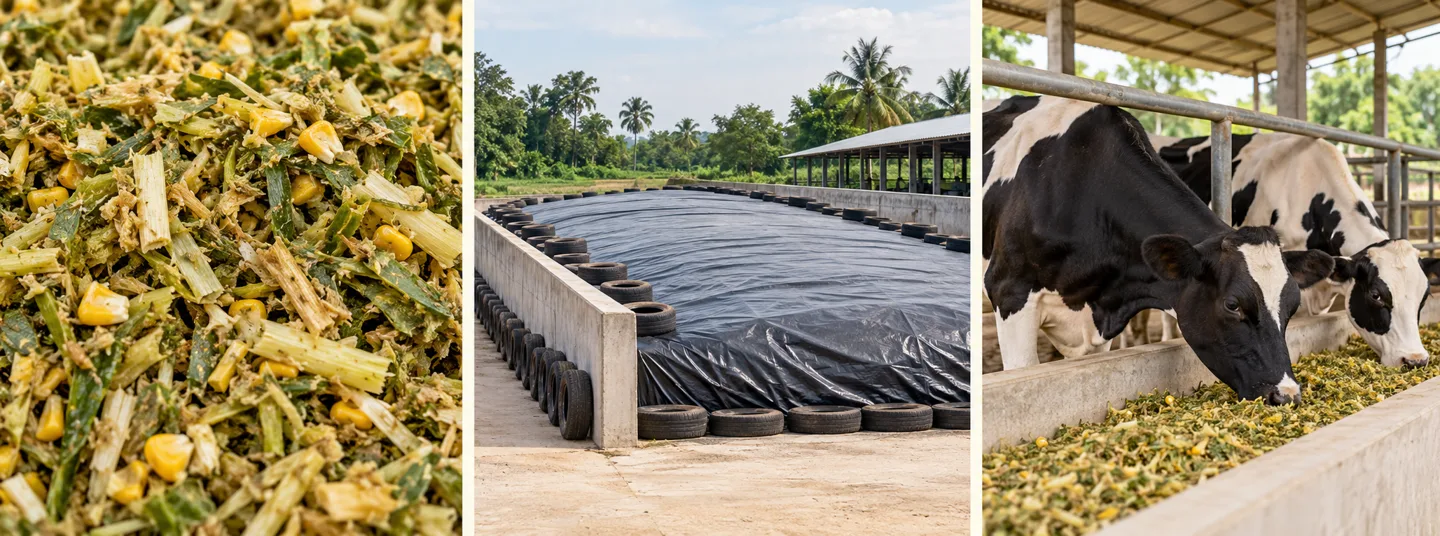
Silage is moist crop material preserved by fermentation without oxygen. Farmers use maize, grass and other suitable fodder crops to store feed for later. Packing and sealing help bacteria produce acids that preserve the crop. [1]
What is silage made of?
Common silage crops include maize (corn), sorghum and suitable grasses. Cereal and legume crops can also be conserved this way. Crop moisture and available sugars affect fermentation, so one preparation method does not suit every crop. [2]
| Type | Crop material | Key distinction |
|---|---|---|
| Maize / corn silage | The harvested whole maize plant | Includes grain and forage; it is not just corn kernels. |
| Grass silage | Suitable harvested grasses | Wilting may be needed before packing. |
| Other forage silage | Sorghum, cereals or legumes | Moisture and crop characteristics need separate consideration. |
Crop selection and preparation: NC State Extension and Cargill India. [2] [3]
Why do farmers use silage?
Good-quality silage helps maintain a reliable forage supply when fresh fodder is limited. Within a balanced ration, digestible silage can support feed intake and milk production. Its value depends on crop type, harvest stage, preservation and the rest of the diet. [3] [6] The trade-off is the need for suitable storage, equipment and careful management. Its water content makes transport costly, and poor sealing can waste feed. [4]
Silage nutrition: protein, milk production and fertility
Is silage a high-protein feed?
Silage describes how a crop is preserved, not a fixed nutrient composition. Maize silage is mainly valued for starch, energy and forage fibre; it usually needs a complementary protein source. Grass and legume silages can supply more protein, but actual values vary. Test your own forage rather than assuming every silage is high in protein. [5] [7] [8]
Can good silage improve milk production?
Yes, when better-quality silage improves the supply of digestible nutrients in a correctly balanced diet. Poor-quality silage can limit intake and the energy available for milk. The response depends on the previous ration, silage analysis, total intake, lactation stage and cow health; a fixed increase in litres cannot be promised. [6]
Does silage bring cows into heat on time?
Adequate nutrition and appropriate body condition support normal reproductive function. After calving, an energy shortage and excessive loss of body condition can delay ovulation. Suitable silage can contribute to meeting energy needs within a balanced ration, but silage alone does not guarantee timely heat or pregnancy. [9]
Silage alone should not be assumed to meet all nutritional requirements. Balance energy, protein, effective fibre, minerals and vitamins, and provide clean water. If a cow is not showing heat, have feeding, heat detection and reproductive health assessed. [9] [10]
Silage vs hay vs haylage
The main difference is how the forage is preserved. Hay relies on drying; silage relies on fermentation and excluding air. Haylage is a drier form of ensiled forage. [1] [2]
| Feed | Preservation | Storage need |
|---|---|---|
| Silage | Moist forage fermented without oxygen | An effective airtight seal |
| Hay | Forage dried before storage | Protection from rain and damp |
| Haylage | Wilted forage conserved by ensiling | Airtight storage or wrapping |
Neither hay nor silage is automatically the better feed. Choose according to crop, weather, storage and feeding needs. [2]
How to make silage: the basic process
- Harvest at suitable moisture. Check the crop rather than relying only on its age or appearance.
- Chop and fill promptly. Use a suitable chop length and distribute material evenly.
- Compact and seal quickly. Reduce trapped air and protect the seal from damage.
- Allow fermentation. Monitor the store and plan feed-out before opening.
These are the basic preservation stages, not a complete operating specification. [4]
What does dry matter mean?
Dry matter is the portion left after water is removed. For example, 100 kg of silage at 35% dry matter contains 35 kg of dry matter and 65 kg of water. This matters when comparing feed quantities or costs.
NC State gives approximately 30–35% dry matter for corn in its general harvest table, with different guidance for bag and tower silos. Treat that as a starting reference, not a universal target. [2]
When can you open silage, and how should you store it?
There is no single opening day for every crop and system. Manitoba describes stabilization in around 3–4 weeks; Cargill India advises about two months. Follow crop-specific guidance and confirm fermentation is complete before opening. [4] [3]
Keep the seal intact and limit air entry during storage. Once opened, exposed material deteriorates, so match the store size to how quickly your herd will use it. [1]
Silage for cows: plan the whole ration
Maize silage supplies energy, but the ration still needs appropriate protein and other feed components. The amount suitable for an animal depends on its needs and the rest of its diet. AHDB highlights the importance of supplementation and balanced rations. [5]
Do not copy a single fresh-weight allowance for every cow. Use forage analysis and qualified ration advice. Compare feeds on a dry-matter basis, rather than assuming equal fresh weights provide equal nutrition. [5]
Discard spoiled silage. A damaged seal, heating or visible mould should prompt a closer quality check; smell alone does not establish feed safety. [1]
Put the guide to work
Plan your silage supply
Estimate quantity and storage with your own herd inputs. A planning calculator does not formulate a balanced ration.
Open silage calculator →Common questions about silage
What is silage used for?
It stores forage for later feeding, including periods when fresh fodder is limited. [3]
Are corn silage and maize silage the same?
Yes. Corn and maize refer to the same crop. Whole-crop silage includes the forage and grain, rather than grain alone. [1] [3]
Is silage fresh grass or dried hay?
Neither. It is forage preserved by fermentation without oxygen; hay is preserved by drying. [1]
How much silage does a cow need per day?
There is no single allowance for all cows. Use forage analysis and a ration appropriate to the animal and its other feed. The calculator estimates supply from an allowance you enter. [5]
Sources & review notes
Educational guide based on the references below. Local crop conditions and storage systems can require different practices.
- Oregon State University — Silage
- NC State Extension — Silage and Haylage Production
- Cargill India — How to make silage for dairy cows
- Manitoba Agriculture — An Introduction to Silage
- AHDB — Feeding maize silage to cattle
- Teagasc — Grass silage quality and dairy performance
- Feedipedia — Maize silage nutrient composition (30–35% dry matter)
- Feedipedia — Alfalfa silage nutrient composition
- University of Wisconsin Extension — Nutrition, body condition and reproduction
- Penn State Extension — Total mixed rations for dairy cows
Reviewed 17 October 2026. Send a correction.